


Testosterone is the primary male sex hormone and an anabolic steroid that plays vital roles in men’s health. It drives masculine development at puberty, regulates muscle mass, bone density, red blood cell production, and libido, and affects mood and energy. Still, many younger and middle-aged men also experience deficiencies. Recently, interest in “low T” has surged: millions of men seek information and treatment. Clinicians note a three-fold rise in testosterone prescriptions in the U.S. over the past decade, as reported by JAMA Internal Medicine. At the same time, debate continues about who truly needs therapy. This guide will help you understand what testosterone is, how levels change through life, and how to recognize, diagnose, and treat low testosterone. You’ll learn common symptoms of hypogonadism, causes (including lifestyle factors), and evidence-based treatment options, from natural lifestyle fixes to medical therapies. We’ll also dispel myths (e.g., “TRT causes prostate cancer”) with facts, and answer key FAQs on testosterone and men’s health. Whether you’re health-conscious, facing fatigue or low libido, or just curious about “how testosterone works,” this guide aims to give you a thorough, up-to-date overview. In adult men, normal testosterone supports vitality: maintaining muscle mass, fat distribution, mood balance, and sexual function. For a detailed breakdown, see the benefits of high testosterone. Some signs of high levels may be subtle. Check our guide on recognizing elevated testosterone. Wondering about its effect on growth? Here's the science behind testosterone and height.
What is Testosterone?
Testosterone is an androgenic steroid hormone mainly produced in the male testes (and in much smaller amounts by the ovaries in women and adrenal glands in both sexes). As the body’s main male hormone, it stimulates the development of male characteristics: deepening the voice, facial and body hair, and growth of genitalia. It’s a lipid (fat)‑derived hormone built from cholesterol. In men, testosterone levels are much higher than in women.
The Hormone’s Roles
Testosterone has a wide range of functions: it promotes muscle and bone strength, supports red blood cell and sperm production, and sustains libido and a sense of well-being. For example, it signals the bone marrow to make new blood cells, keeps bones and muscles healthy, and enhances sexual desire. In fetal development, testosterone drives male sexual organ formation, and during puberty, it triggers the typical adolescent growth spurt and the development of pubic hair, deeper voice, and increased height. In adult men, normal testosterone supports vitality: maintaining muscle mass, fat distribution, mood balance, and sexual function. Like many hormones, testosterone levels fluctuate daily and seasonally. They are highest in the morning (which is why blood tests are done early). Although labs vary, young adult men typically have about 300–1,000 ng/dL (nanograms per deciliter). A common reference range is roughly 300–1,000 ng/dL for healthy adult males. Levels peak in late adolescence/early 20s and then slowly decline with age. Each year, after about age 30–40, men lose roughly 1–2% of their testosterone. In other words, “levels peak by early adulthood and drop up to 2% per year after age 40,” according to the Mayo Clinic.
Hormone Chemistry
Testosterone is classified as an anabolic-androgenic steroid. “Anabolic” refers to its muscle-building effects, while “androgenic” describes its role in developing male characteristics. Chemically, testosterone is derived from cholesterol. In the bloodstream, it circulates in two forms: bound (primarily to sex hormone–binding globulin or SHBG) and free (the active form).
Synthetic testosterone used in medical treatments is structurally identical to natural testosterone. However, it is often administered in higher doses, especially in performance-enhancing contexts. When athletes or bodybuilders use “steroids,” they are usually taking supraphysiologic doses of synthetic testosterone, which may carry serious health risks such as hormonal imbalances, cardiovascular strain, and infertility. For a full overview of these effects, see our blog on Testosterone Injections: Uses, Benefits, and Potential Side Effects.
Testosterone Across a Man’s Life
Testosterone levels fluctuate significantly throughout a man’s life, from puberty to old age. Understanding this natural rhythm can help you spot when something might be off or simply part of the aging process.
Puberty and Early Adulthood
Testosterone production ramps up during puberty, usually between the ages of 10 to 15. This surge triggers key developmental changes such as growth spurts, increased muscle and bone mass, pubic and underarm hair, genital growth, and voice deepening. Teenage testosterone levels vary greatly, moving from very low pre-puberty values to hundreds of nanograms per deciliter (ng/dL) during adolescence.
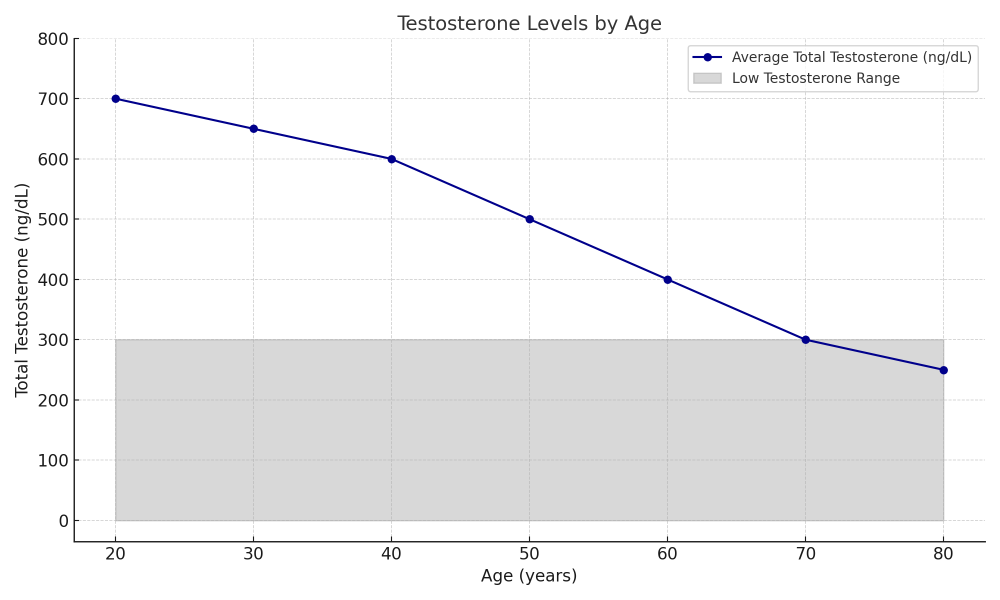
By the late teens and early 20s, most men reach peak testosterone, typically around 600–900 ng/dL. In general, men in their 20s have the highest average levels of testosterone. If you're interested in the typical hormone patterns across the lifespan, refer to our full guide on Testosterone Levels by Age.
A large-scale study found that by age 45, nearly 40% of men may have testosterone levels classified as low. By age 80, that number rises to 50%, often due to age-related decline. For example, a healthy 20-year-old male might have 500–700 ng/dL, while a healthy man over 70 could average 150–300 ng/dL. That said, levels are only one part of the story; symptoms and health status matter, too. For more on what counts as “normal,” check out our article on Testosterone Levels in Men.
Middle Age
In your 30s and 40s, testosterone begins a slow, steady decline. On average, men lose about 1–2% of total testosterone per year after age 30. This can lead to subtle shifts in energy, mood, body composition, and libido. However, age isn’t the only factor. Health conditions like obesity or metabolic syndrome can accelerate the decline.
A Harvard health report notes that body weight may influence testosterone more than age. A 5-point increase in BMI (e.g., 30 to 35) can mimic the effects of a decade of aging. That means an overweight 40-year-old may have the testosterone profile of a healthy 50-year-old.
In terms of prevalence, about 12% of men in their 50s meet the clinical criteria for low testosterone (also called “biochemical hypogonadism”), rising to 49% in their 80s. But only 6% of men have both low levels and multiple symptoms such as fatigue, low libido, or mood changes. To learn more about how doctors diagnose and treat these symptoms, read our guide on Low Testosterone: Symptoms, Diagnosis, and Treatment.
Older Age
In men over 60, testosterone continues its downward trend. Even healthy older men often have levels below 400 ng/dL. Research shows that by age 70, many men fall into the 150–300 ng/dL range, nearly a third less than in early adulthood.
However, testosterone levels don’t tell the whole story. Some men function well with lower numbers, while others experience symptoms like low energy, erectile issues, or loss of muscle mass. It's important to consider both bloodwork and clinical symptoms before jumping to conclusions. For more on how aging affects sexual health specifically, see our article on Erection Problems on TRT: What to Know Before You Start Testosterone Therapy.
Despite the natural decline, not every man develops low testosterone symptoms. But when symptoms do appear alongside a significant drop in levels, doctors may diagnose late-onset hypogonadism, also known as “andropause.” Conditions like diabetes, chronic illness, and obesity can increase the risk of this age-related hormonal deficiency. To naturally support healthy hormone levels as you age, explore our tips in 8 Ways to Naturally Increase Testosterone.
Symptoms of Low Testosterone
Many symptoms of low testosterone (male hypogonadism) are subtle or overlap with other conditions. However, key signs tend to affect sexual function, body composition, and mood or energy. Men and doctors look for these red flags:
Sexual Dysfunction: A reduction in sex drive (libido) is a classic symptom. Men may have less interest in sexual activity. Low testosterone can also cause or worsen erectile dysfunction (difficulty getting or maintaining an erection). Some men with very low T experience smaller, softer testes. Fertility can decline testosterone deficiency often leads to decreased sperm count and infertility.
Changes in Body Composition: Low T tends to reduce muscle mass and strength while increasing body fat. Men may notice they put on fat more easily and lose muscle tone. Testosterone also influences bone density; long-standing low T can lead to osteoporosis (thinning bones) and higher fracture risk. Other physical changes can include decreased body and facial hair growth, and in some cases, swelling of breast tissue (gynecomastia).
Energy, Mood, and Cognition: Many men report that low testosterone causes fatigue and low energy. They may feel chronically tired without a clear reason. Mood changes are common. Low T is linked to feelings of sadness or depression and irritability. Cognitive effects include difficulty concentrating and “brain fog.” Other possible signs are anemia (low blood counts) and even hot flashes (similar to menopausal symptoms).
Other Signs: Decreased nighttime or early-morning erections, sleep disturbances, decreased motivation or confidence, and a general sense of not “feeling like yourself” can all accompany low T. Some men also notice trouble with spatial awareness or memory (though research on cognition is still evolving).
It’s important to note that many of these symptoms, such as nonspecific fatigue, moodiness, and weight gain, can result from stress, aging, medical conditions, or poor sleep, not just low testosterone. Likewise, not every man with low testosterone will have every symptom. The combination of several signs (especially sexual symptoms plus others) makes hypogonadism more likely. If you experience a cluster of these symptoms, consider discussing them with a doctor and getting your levels checked.
Causes of Low Testosterone
Low testosterone (hypogonadism) can arise from many factors, often divided into primary (testicular) and secondary (pituitary or hypothalamic) causes. In practice, common causes include:
Aging and Medical Conditions: By far the most common cause in adult men is age-related decline, sometimes called “late-onset hypogonadism.” Testosterone production naturally slows with age. This decline can be accelerated by chronic illnesses. For example, type 2 diabetes, obesity, and metabolic syndrome are strongly linked to lower testosterone. Experts note that weight gain itself has a bigger impact on T than aging. Even healthy middle-aged men often have lower T if their BMI is high. Other health conditions, such as sleep apnea, liver or kidney disease, HIV/AIDS, or thyroid disorders, can also suppress testosterone production.
Obesity and Lifestyle: Being overweight is a well-known risk factor for hypogonadism. Excess fat tissue can convert testosterone into estrogen, further lowering T levels. A sedentary lifestyle, poor diet, and excessive alcohol use can contribute indirectly. Conversely, vigorous exercise and weight loss tend to raise testosterone. (We’ll cover natural boosting later.)
Genetics and Developmental Issues: Some men are born with conditions that impair testosterone. For instance, Klinefelter syndrome (an extra X chromosome) leads to underdeveloped testicles and chronically low T. Undescended testicles (cryptorchidism) in infancy, if not corrected, can cause testicular failure.
Injury or Disease of the Testes: Direct problems with the testes (“primary hypogonadism”) reduce T production. Examples include mumps orchitis (mumps infection in adulthood damaging the testes), testicular injury or torsion, and testicular cancer treatments. Iron overload disorders (hemochromatosis) can also damage testicular tissue.
Pituitary or Hypothalamic Issues: The brain glands that drive testosterone (hypothalamus and pituitary) can malfunction (“secondary hypogonadism”). Pituitary tumors, radiation therapy to the brain, or genetic conditions like Kallmann syndrome (a developmental defect) can block the hormonal signals (LH and FSH) needed to stimulate the testes. Chronic pituitary disorders or high prolactin levels can likewise suppress testosterone.
Medications and Treatment Effects: Certain drugs or treatments can lower testosterone. Long-term steroid (cortisone) use or opioids can suppress the hormonal axis. Chemotherapy and radiation for cancer often temporarily (or permanently) reduce testicular function. Some prostate cancer treatments intentionally block testosterone.
Because multiple factors often coincide (for example, older age plus obesity), it can sometimes be hard to pinpoint the exact cause. A doctor will review your medical history, medications, and symptoms to identify likely causes.
In summary, low T in men is most often due to age and lifestyle-related health issues, while rare genetic or injury-related causes account for fewer cases.
How Testosterone is Tested
Diagnosing low testosterone begins with a blood test. Because testosterone levels naturally fluctuate throughout the day, labs typically require a morning blood draw (usually before 10 AM), when levels are at their peak. Your doctor will often order a total testosterone test as the first step.
Due to daily variability, it’s common for physicians to order two separate blood tests on different days to confirm consistently low levels. Research shows that in about 30% of men, an initially low testosterone reading returns to normal on repeat testing. This is why confirmation is essential before making any diagnosis.
What Do the Numbers Mean?
Normal testosterone ranges can vary slightly between labs, but many use a reference range of approximately 300 to 1000 ng/dL for adult men. Clinically, most guidelines consider a total testosterone level below 300 ng/dL to be low, or hypogonadal. However, numbers alone don’t tell the full story. As Harvard health experts note, a diagnosis typically requires both a low testosterone level and relevant symptoms.
For example:
A man with a reading of 290 ng/dL but no symptoms may not need treatment.
A man with a level of 320 ng/dL who reports fatigue, low libido, and erectile dysfunction might still be considered hypogonadal.
If the total testosterone result is borderline or doesn't explain the symptoms, doctors may also measure:
Free testosterone (the unbound and biologically active form)
Bioavailable testosterone (free + loosely albumin-bound T)
Free testosterone usually makes up 1–2% of total testosterone and is especially helpful to assess in men whose total levels appear normal, but who still have symptoms.
Additional Testing
To identify the root cause, a doctor may check related hormones:
Luteinizing hormone (LH) and follicle-stimulating hormone (FSH), to distinguish primary (testicular) from secondary (pituitary/hypothalamic) hypogonadism.
Prolactin, estradiol, or sex hormone-binding globulin (SHBG) as needed.
For example:
Low T with high LH/FSH usually points to a testicular issue.
Low T with low or normal LH/FSH suggests a pituitary or hypothalamic problem.
Summary: How Testosterone Is Typically Tested
Factor | Details |
Timing | Morning blood draw (before 10 AM); fasting is not usually necessary |
Repeat Testing | Two tests on separate days to confirm abnormal levels |
What’s Measured | Total testosterone first, free T, SHBG, LH, FSH, or prolactin if needed |
Diagnosis Criteria | Total T consistently below ~300 ng/dL plus symptoms like fatigue, low libido, or ED |
Important: Testosterone levels must always be interpreted in a clinical context. Lab values alone don’t guarantee a diagnosis. If you're experiencing symptoms, speak to a provider who understands men’s hormone health.
Treatment Options for Low Testosterone
If testing confirms low testosterone and it’s affecting your quality of life, treatment may be appropriate. Options fall into two main categories: medical therapy (especially testosterone replacement) and natural or supportive approaches. All treatments should be guided by a qualified healthcare professional.
Testosterone Replacement Therapy (TRT)
TRT involves replacing the hormone your body is no longer producing at optimal levels. Several FDA-approved delivery methods are available:
Injections
Forms: Testosterone cypionate or enanthate
Dosing: Typically injected into a muscle every 1 to 4 weeks
Pros: Cost-effective, reliable at raising levels
Cons: Can cause “peaks and valleys” in mood or energy as levels rise and fall between injections
Gels or Creams
Brands: AndroGel, Testim, etc.
Application: Applied daily to the skin (usually shoulders or arms)
Pros: Provide steady levels
Cons: Risk of testosterone transfer to others through skin contact unless washed or covered
Patches
Example: Androderm
Use: Worn on the skin overnight
Pros: Daily dosing mimics natural rhythm
Cons: May cause skin irritation
Pellets
Brand: Testopel
Application: Implanted under the skin (usually buttocks) every 3 to 6 months
Pros: Long-lasting, low maintenance
Cons: Requires a minor surgical procedure
Oral Capsules
Brand: Jatenzo (testosterone undecanoate)
Pros: New formulation avoids liver toxicity seen with older oral testosterone
Cons: Must be taken with food, and may not be suitable as a first-line option
Nasal Gel
Brand: Natesto
Use: Applied inside the nostrils multiple times per day
Pros: Convenient for men who can’t tolerate other forms
Cons: Requires frequent dosing and may cause nasal irritation
TRT Effectiveness and Monitoring
TRT is typically highly effective at relieving symptoms. Most men report noticeable improvements in:
Libido and sexual performance
Energy levels
Mood and confidence
Muscle strength and body composition
Bone density
According to multiple studies, many men feel better within 4 to 6 weeks of starting therapy, though full benefits may take longer to stabilize.
However, TRT also comes with risks and monitoring requirements:
It increases red blood cell production, so hematocrit must be monitored to prevent thickened blood.
TRT suppresses sperm production and can shrink the testicles. For men who want to maintain fertility, TRT is not recommended.
In such cases, alternatives like clomiphene citrate or hCG (human chorionic gonadotropin) are considered.
Doctors will monitor testosterone levels during treatment and adjust dosing as needed. They may also check PSA levels, lipid profiles, and other markers depending on your risk profile.
Other Medical Treatments
Not all men need or want testosterone itself. In some cases, other medications can raise the body’s own testosterone:
Clomiphene citrate (Clomid) – a drug that blocks estrogen feedback in the brain, which stimulates the pituitary to produce LH and thus raise testosterone. Clomiphene is often used in younger men or men who want to preserve fertility because it can increase testosterone and stimulate sperm production. Studies show it can safely improve testosterone levels and symptoms long-term in many men.
Human Chorionic Gonadotropin (hCG) – a hormone that mimics LH. hCG injections can stimulate the testes to produce testosterone (and sperm). It’s usually used in combination with other therapies, especially in men desiring fertility.
Aromatase inhibitors (e.g. anastrozole) – sometimes used off-label to raise T by blocking its conversion to estrogen. This is not a first-line approach but may be considered in specific cases (e.g. high estrogen levels with low T).
DHEA or other supplements – dehydroepiandrosterone (a mild adrenal hormone) and various “testosterone booster” supplements (vitamins, herbs) are marketed to increase T. However, evidence is limited. Large clinical improvements with these supplements are usually lacking. Always consult a doctor before taking any supplement, as they can have side effects or interact with other medications.
Lifestyle and Natural Approaches
Since obesity, poor diet, and inactivity are major causes of low testosterone, lifestyle changes can significantly help raise T, sometimes even without drugs. Recommended natural strategies include:
Lose excess weight: Studies and experts emphasize weight loss as crucial. Harvard endocrinologists note that weight gain has a far larger impact on testosterone than aging (health.harvard.edu). In fact, shedding a few BMI points can substantially boost levels. Even a 5% weight loss can start to improve testosterone in overweight men.
Exercise regularly: Both strength training and high-intensity exercise spur testosterone. Research shows testosterone levels rise for up to an hour after exercise, especially in younger men (nm.org). Weightlifting exercises (squats, deadlifts, bench press) are particularly effective at raising T (nm.org). Aerobic exercise (cardio) also helps by aiding weight loss. Aim for 3–4 days per week of combined cardio and resistance training (nm.org).
Eat a balanced diet: Ensure you’re getting enough healthy fats (avocados, olive oil, nuts) and protein, which are needed for hormone production. Zinc and vitamin D are nutrients linked to testosterone. (Some studies find men with vitamin D deficiency have lower testosterone, suggesting that correcting D deficiency may raise T (pmc.ncbi.nlm.nih.gov).) Also eat plenty of fruits, vegetables, and fiber, and avoid excessive sugar. A heart-healthy diet that prevents metabolic syndrome will protect your testosterone levels.
Get adequate sleep: Poor sleep and chronic insomnia can markedly reduce testosterone. Aim for 7–8 hours of quality sleep per night. Growth hormone and testosterone surge during deep sleep, so sleep deprivation is a big “enemy” of testosterone.
Manage stress: Chronic stress raises cortisol, which can inhibit testosterone production. Practice stress-reduction techniques (meditation, yoga, or simply enjoyable hobbies) to help maintain a healthy hormonal balance.
Limit alcohol and drugs: Excessive alcohol, smoking, and illicit drug use can all harm testosterone levels. Moderation is key.
Review medications: Some prescription drugs (opioid painkillers, glucocorticoids, certain antidepressants) can lower testosterone as a side effect. If possible, discuss alternatives with your doctor.
In Northwestern Medicine’s review of lifestyle factors, even diet and sleep are important: a healthy body weight, good diet, and adequate rest all maximize testosterone naturally (nm.org).
Monitoring and Follow-up
If you and your doctor decide to start any therapy, you’ll be monitored for effectiveness and side effects. For testosterone replacement, this usually means checking testosterone levels 2–3 months after starting, then yearly, as well as blood counts and prostate-specific antigen (PSA). For lifestyle changes, repeat lab tests after a few months to see if your testosterone improved with weight loss or exercise. Keeping a symptom diary can help track improvements in mood, energy, or sex drive.
Internal Links: For more on raising testosterone naturally, check our [exercise and diet blogs]. See our [erectile dysfunction articles] for related sexual health strategies.
Testosterone Myths and Facts
Men’s health is full of misconceptions about testosterone. Let’s set the record straight on some common myths:
Myth: “Testosterone therapy causes prostate cancer.”
Fact: This belief came from outdated theories, but modern research does not support it. A 2024 study published in JAMA Network Open found no increased risk of prostate cancer in men with low testosterone who used TRT compared to those who did not (health.harvard.edu). When used carefully in men with confirmed low testosterone, TRT appears safe from a prostate standpoint.
(Note: Men with known prostate cancer should avoid TRT unless under specialist care.)
Myth: “TRT will give me a heart attack or stroke.”
Fact: Earlier, smaller studies raised concerns, but recent large trials do not show higher cardiovascular risk. The Dallas Heart Study and other major analyses reported no increase in heart attacks or strokes among men on TRT compared to those not using it (health.harvard.edu). A major trial of older men with low testosterone also found no rise in heart attack, stroke, or death with TRT (health.harvard.edu).
(That being said, cardiovascular screening is still important, especially for men with existing heart disease.)
Myth: “Only old men get low testosterone.”
Fact: While testosterone levels do tend to decline with age, younger men can also experience low T. Factors like obesity, diabetes, or pituitary problems often matter more than age alone. One Harvard expert notes that weight gain has a “bigger impact on testosterone levels than aging” (health.harvard.edu). Many men in their 30s and 40s meet the criteria for low testosterone, especially if they have metabolic or hormonal conditions. Studies show about 2% of men over 40 already qualify as having late-onset hypogonadism (my.clevelandclinic.org).
Don’t assume age protects you. Any adult man with symptoms should get tested.
Myth: “If I have erectile dysfunction (ED), my testosterone must be low.”
Fact: Low T can contribute to ED or reduced libido (pmc.ncbi.nlm.nih.gov), but many cases of ED occur even when testosterone levels are normal. Vascular disease, neurological issues, medications, and aging are often the real causes. While low testosterone may worsen ED, it is not the only factor.
In short, normal T doesn’t guarantee strong erections, and ED doesn’t always mean low T. Each should be evaluated on its own.
Myth: “Testosterone therapy causes aggression or ‘roid rage.’”
Fact: Medical TRT (at therapeutic doses to restore normal levels) typically does not cause extreme mood changes. Aggressive behavior is more commonly linked to abuse of anabolic steroids at high doses. Some men on TRT may experience mild irritability or mood swings, but most report improved mood and emotional well-being. Studies show that properly managed TRT often leads to better mood, confidence, and reduced anxiety in men with low T (healthline.com).
Myth: “Taking testosterone or supplements will instantly make me a muscle-bound, energetic powerhouse.”
Fact: TRT may improve muscle mass and energy if you are truly deficient, but it’s not a miracle cure. Gains are usually moderate unless paired with strength training and a proper diet. Also, common supplements advertised as “T boosters” often lack solid scientific backing.
For real muscle and energy improvements, TRT should be combined with lifestyle changes, not relied on alone (healthline.com).
Conclusion and Action Steps
Testosterone is a crucial hormone in men’s health, influencing vitality, strength, mood, and sexual function. Understanding its role and knowing the signs of imbalance can help you take charge of your well-being. Key takeaways: If you experience unexplained fatigue, low libido, muscle loss, or mood changes, consider whether low testosterone might be a factor, especially if you also have risk factors like obesity or chronic illness. Talk to your doctor about testing in the morning, and be prepared to discuss both lab values and your symptoms. Remember, lifestyle matters: losing excess weight, exercising regularly, eating well, and sleeping enough can dramatically improve testosterone on their own. If low testosterone is confirmed, weigh all options with your physician. TRT (gels, injections, etc.) can be very effective but requires monitoring. For those not ready for medication, or who have mild cases, natural approaches (weight loss, strength training, vitamin D/zinc supplementation) are excellent first steps. Even small changes like lifting weights or cutting sugary drinks can nudge testosterone higher. Don’t overlook mental health: stress management and good sleep hygiene protect your hormones. Above all, be proactive: know your numbers and your health goals. Get informed about testosterone (like you are now) and seek help if something feels off.
Our Action Steps for men aged 20–60+:
Self-Check: Review symptoms of low testosterone (low energy, mood changes, poor sexual function). If several apply, consider evaluation.
See a Doctor: Discuss your concerns; ask for a morning testosterone test (or better, two tests on different days). Also, review other health issues (sleep apnea, thyroid, depression) that can mimic low T.
Lifestyle Changes: Adopt a healthier lifestyle now. Lose weight if needed, lift weights, get adequate sleep, and manage stress. These steps boost testosterone and overall health.
Stay Informed: Read up on men’s health and hormone therapy. Visit our [men’s wellness section] for fitness, nutrition, and lifestyle tips. If considering therapy, check our [TRT guide] and talk to a specialist in men’s hormones or urology.
Testosterone levels are just one piece of the health puzzle. But by taking a balanced approach of healthy living and medical care when needed, you can optimize your energy, strength, and quality of life at any age.
Resources
For further reading, here are some trusted sources:
Cleveland Clinic Health Library: Testosterone – Function & Levels
A thorough overview of what testosterone does and how levels are measured.Mayo Clinic: Male Hypogonadism – Symptoms & Causes
Easy-to-read information on the causes and symptoms of low testosterone.Harvard Health Publishing: A New Look at Testosterone Therapy (2024)
Insights into TRT, safety, and recent evidence, including prostate cancer risks.Endocrine Society Guidelines (2018)
Clinical recommendations on diagnosing and treating male hypogonadism.Northwestern Medicine: Can Physical Activity Affect Testosterone?
Looks at how lifestyle habits like exercise directly impact testosterone.American Urological Association (AUA)
Guidelines and summary statements recommending <300 ng/dL as a diagnostic threshold.

Comment section
Comments