

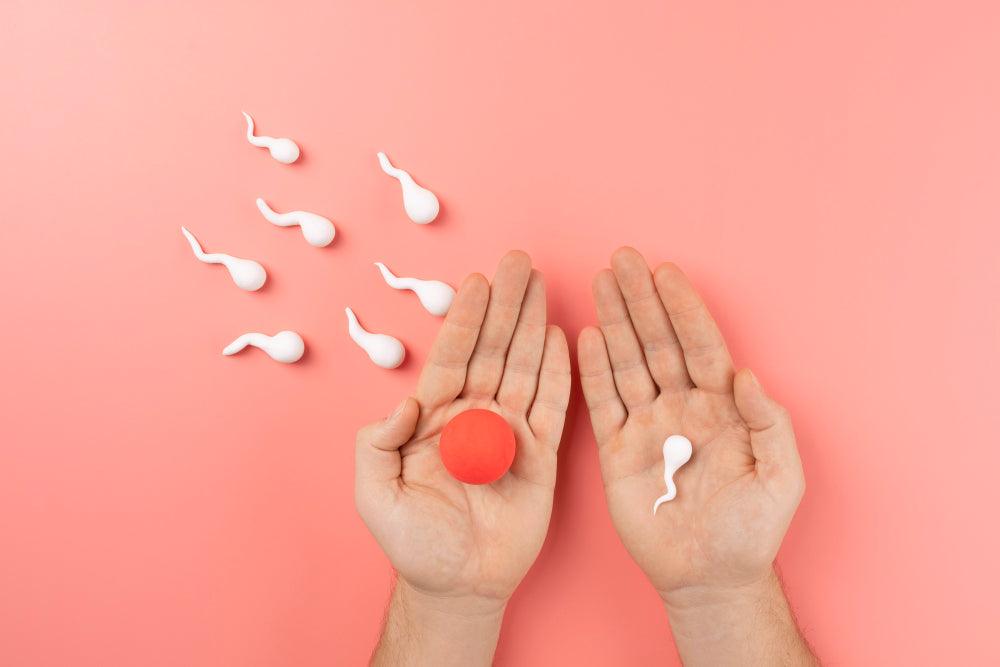

Often, when people try to deal with their sexual health, they get confused and ask themselves many times about the chance of getting pregnant after engaging in different types of sex. The most common question is usually about pre-cum and its ability to cause pregnancy. This article aims to answer these questions as well as others that may be related to them by giving clear answers that are easy to understand to enable every individual to take care of his or her sexual life appropriately.
What are the Chances of Getting Pregnant from Precum?
Precum, also known as pre-ejaculate, is a fluid produced by men during sexual arousal. It comes out from Cowper’s glands, whose main function is neutralizing the acidity caused by urine within the urethra, thus making it safer for sperm that pass through during ejaculation. It also helps in lubricating the penis while having sex.
Fertility Potential: It is not common knowledge but still true that precums hardly have any sperms in them; however, if a man has ejaculated before and then pees less than twice he still can have some leftover inside his urethra which will come out together with the next batch of precums when he gets turned on again. The risk of getting pregnant from this alone is quite minimal but still possible especially if such a liquid enters into contact with her vagina.
Pro Tip: If a couple is not planning for pregnancy, using protection—even during foreplay—is essential. There have been documented cases where pregnancy occurred from genital contact alone, even without full penetration.
Should I Take Plan-B for Precum?
Compared to semen, pre-ejaculate has a low risk of causing pregnancy, but this does not mean that it can’t be responsible for conception when combined with residual sperm. The likelihood of such a situation happening increases if the male partner has ejaculated recently and failed to urinate afterward, thereby leaving sperm in his urethra.
Plan B Consideration:
Also known as Levonorgestrel, Plan B is an emergency contraceptive used to prevent pregnancy after unprotected sex or failure of birth control methods. This means that taking Plan B would be a good idea after having sex without using any protection and cumming inside or on top because sometimes the pre-cum may contain sperm. The sooner it is taken within 72 hours after intercourse, the more effective it becomes, though its efficacy decreases every day after.
Important Note: Plan B is not an abortion pill, and it won’t work if you’re already pregnant. It’s most effective when taken within the first 24 hours after potential sperm exposure.
Can You Get Pregnant if Only the Tip Goes In?
Many people underestimate how risky partial penetration can be in terms of getting pregnant. Suppose some precum or semen — whether inserted deliberately or accidentally — touches the vagina. In that case, there are chances that sperms will move up through the vaginal canal and fertilize eggs there even without ejaculation inside.
Preventive measures: To lower risks, protection must be used during the whole time of sexual activity and not only at ejaculation. Condoms need to be put on before there is any contact between the genitals to ensure that neither partner gets an unwanted pregnancy or sexually transmitted infections (STIs). This is particularly important in relationships that are not strictly monogamous or when STI statuses are undisclosed.
Myth Busted: "Just the tip" can result in pregnancy. Sperm are microscopic and fast-moving. It only takes one to fertilize an egg.
How Effective is Withdrawal as a Contraceptive Method?
Withdrawal method, commonly known as “pulling out,” is one of the oldest forms of contraception. It involves a male partner removing his penis from a female’s vagina just before he ejaculates to prevent semen from entering her vaginal canal.
Effectiveness: According to Planned Parenthood, withdrawal has an average failure rate of 20%. This means that among couples who use withdrawal as their sole means for preventing pregnancy, approximately 20 out of every 100 women will get pregnant unintentionally within one year. This method has been adopted. With perfect use, this rate could drop down to around 4% if the male always pulls out correctly each time without exception.
Risks: The major risk involved in withdrawal is the need for timing and self-restraint to ensure that the penis is withdrawn before ejaculation. Another concern is pre-ejaculate fluid (pre-cum), which sometimes carries sperm from previous ejaculations, thus leading to pregnancy.
Reality Check: Pulling out is better than doing nothing, but it’s nowhere near as reliable as condoms or birth control pills.
Can Sperm from Precum Survive in Air? To estimate the dangers associated with precum, it is important to know how long sperm can stay alive outside of a body.
Sperm Life: Environmental factors have a great impact on the viability of sperm, as they are very delicate cells. On exposure to air, sperm begin drying up and losing their ability to fertilize within minutes. Therefore, the chances of sperm surviving in the air for a sufficient duration to bring about impregnation are almost nil.
Chances of Transmission: In real-life situations, it’s nearly impossible for a woman to get pregnant from sperm ejaculated into the atmosphere. However, unlike direct ejaculation which poses high risks, contact between precum and the vaginal area still carries some chances albeit lower ones.
Real Example: If a male touches his penis, then touches the vaginal opening without washing hands, there is a minimal but real chance of pregnancy if sperm were present on the fingers.
What Precautions Can Reduce the Risk of Unwanted Pregnancy? To cut down the chances of pregnancy, use contraceptives that work and practice safe sex.
Contraceptive Utilization: Among the most effective birth control methods are hormonal-like pills, patches, or IUDs. Their correct use renders them almost 100% efficient in preventing pregnancies. It should be noted that condoms not only help to prevent conception but also reduce the risk of getting STIs.
Prevention of STIs: For the prevention and reduction of sexually transmitted diseases and infections, nothing does it better than condoms. It's the only one that can do both i.e. stop STIs as well as pregnancies.
Proactive Planning: Consider long-acting methods like IUDs or contraceptive implants if you're looking for low-maintenance, long-term protection.
How to Discuss Safe Sex with Your Partner? Talking openly with your partner about safe sex can help build trust and increase relationship satisfaction.
Open Communication: It is important to be open about sexual health status and practices with your partner. This may entail letting them know when you last got tested for STIs, sharing details about past sexual encounters, and what you expect as far as safety during sex is concerned.
Mutual Decisions: Healthy sexual relations require consent and shared decision-making between partners. For example, they can agree on which method(s) to use or abstain from altogether; moreover, each person must state their sexual limits without ambiguity lest respect wane away from them towards their lover.
Here at Rxmen, we are dedicated to supporting you through any concerns you may have regarding your sexual health. Our specialists will work with you one-on-one to identify what is going on and provide solutions tailored just for you so that you can live a happy and healthy sex life. If anything is puzzling or if guidance is needed, our experts are always available discreetly and with the highest level of skill. We want to help – don’t wait another day before contacting us about improving your sexual well-being!
Myth vs Fact: Understanding Precum and Pregnancy
Myth | Fact |
You can’t get pregnant from precum. | While rare, precum can carry sperm, especially if there was a recent ejaculation and no urination afterward. |
If there's no full penetration, there's no chance of pregnancy. | Even if only the tip goes in or there's genital contact, sperm in precum can still lead to pregnancy. |
Withdrawal (pulling out) is a completely reliable birth control method. | With typical use, 1 in 5 couples relying only on withdrawal will get pregnant within a year. |
Plan B is only needed if ejaculation happens inside. | If there were no protection at all, taking Plan B can reduce pregnancy risk, even without full ejaculation. |
Sperm in precum can survive in the air and cause pregnancy. | Once exposed to air, sperm in precum die within minutes. Pregnancy risk only exists if it enters the vagina quickly. |
Condoms are only necessary during ejaculation. | Precum exposure before ejaculation can still pose pregnancy and STI risks. Condoms should be worn from start to finish. |
FAQs
1. Does precum always contain sperm?
No, precum itself does not always contain sperm. However, it can pick up leftover sperm from a previous ejaculation, especially if the man has not urinated since. This is why there is still a small risk of pregnancy even without ejaculation.
2. Can precum cause pregnancy during ovulation?
Yes, the chances of getting pregnant from precum increase if a woman is ovulating. Ovulation is the time when the egg is released and is most fertile, so even a small amount of sperm in precum can potentially cause pregnancy.
3. How long does sperm in precum live inside the vagina?
If sperm is present in precum and enters the vagina, it can survive inside for up to 5 days under ideal conditions (such as during ovulation). This is why timing and safe practices matter even if ejaculation doesn’t occur.
4. Is it possible to get pregnant from dry humping with clothes on?
No, it is extremely unlikely to get pregnant through dry humping with clothes on. Sperm cannot travel through layers of clothing. However, if clothes are thin, wet with precum or semen, and there's direct genital contact, the risk is not zero but still very low.
5. Can urinating after sex remove sperm from the urethra?
Yes, urinating after ejaculation can help flush out remaining sperm from the urethra, which may reduce the risk of sperm being present in future precum. However, it’s not a foolproof method of preventing pregnancy.
6. Should I be worried if we used the withdrawal method but didn’t use a condom?
Withdrawal can lower the risk of pregnancy, but it’s far from reliable on its own. If you're concerned, especially during a fertile window, you may consider using emergency contraception like Plan B within 72 hours.
7. Can you get pregnant if precum touches the vulva?
Yes, if precum containing sperm is deposited near the vaginal opening, there is a small chance sperm can swim up the vaginal canal and cause pregnancy. Skin-to-skin genital contact is not risk-free.
8. Is there any way to know if sperm is in precum?
There’s no way to visually detect sperm in precum. It’s a microscopic element, and only laboratory testing can confirm its presence. Because of this uncertainty, it's safer to assume there may be sperm present.
9. Is it safe to rely only on Plan B after unprotected sex involving precum?
Plan B is effective in reducing the chance of pregnancy if taken within 72 hours, ideally within 24 hours. However, it’s not intended for regular use and is less effective than ongoing birth control methods. It’s best used as a backup, not as a primary contraceptive.
10. Can STIs be transmitted through precum?
Yes, several sexually transmitted infections (STIs), including HIV, chlamydia, and gonorrhea, can be transmitted through precum. Using condoms throughout any sexual activity is the most effective way to prevent both STIs and unplanned pregnancy.
Our Other Services:
Sex Therapy in Delhi | Sex Therapy in Mumbai | Sex therapy in Bangalore | Vaginismus Treatment | Sexologist in Delhi | Sexologist in Bangalore | Sexologist in Pune | Sexologist in Kolkata | Sexologist in Mumbai | Best Sexologist in India

Comment section
Comments